Friday, April 20, 2012

Bacon & Leek Quiche


Life is green.

We moved to a new apartment where I have space for a little greenhouse, just in time for spring to bubble up into Seattle with drizzly warm days and hot golden afternoons. I've packed the little greenhouse full of herbs: cilantro, rosemary, thyme, chives, sage, spearmint, peppermint, and even a strawberry and viola. It seems I must acquire a second greenhouse for the tomatoes and basil I'll cultivate in a few weeks. I can't help this plant addiction.

I also have a hopvine hanging in the corner. Yes, a hopvine in an apartment. Crazy, ill-advised, and basically bonkers? Yes. Beautiful? Oh yes.

I'm working on menus for when we open our gluten-free pub/cafe. We're a couple of years from opening our doors, but every new recipe makes it feel closer. Exciting. I found myself pondering what the spring equivalent of shepherd's pie might be. Frittatas are in the works. The quiche is nearly perfected.

Here it is, with bacon, leeks, and onions caramelized in bacon fat, smothered all over in cheddar, awaiting a deluge of beaten egg and soymilk.


It's as delicious as it sounds. It's also low-dairy: soymilk replaces the cream, vegan butter replaces the real butter in the crust, and the only dairy left is real cheddar. My next quiche will use Daiya's cheddar. I can't wait to see how that turns out.

What else should I put on our menu?

Tuesday, March 13, 2012

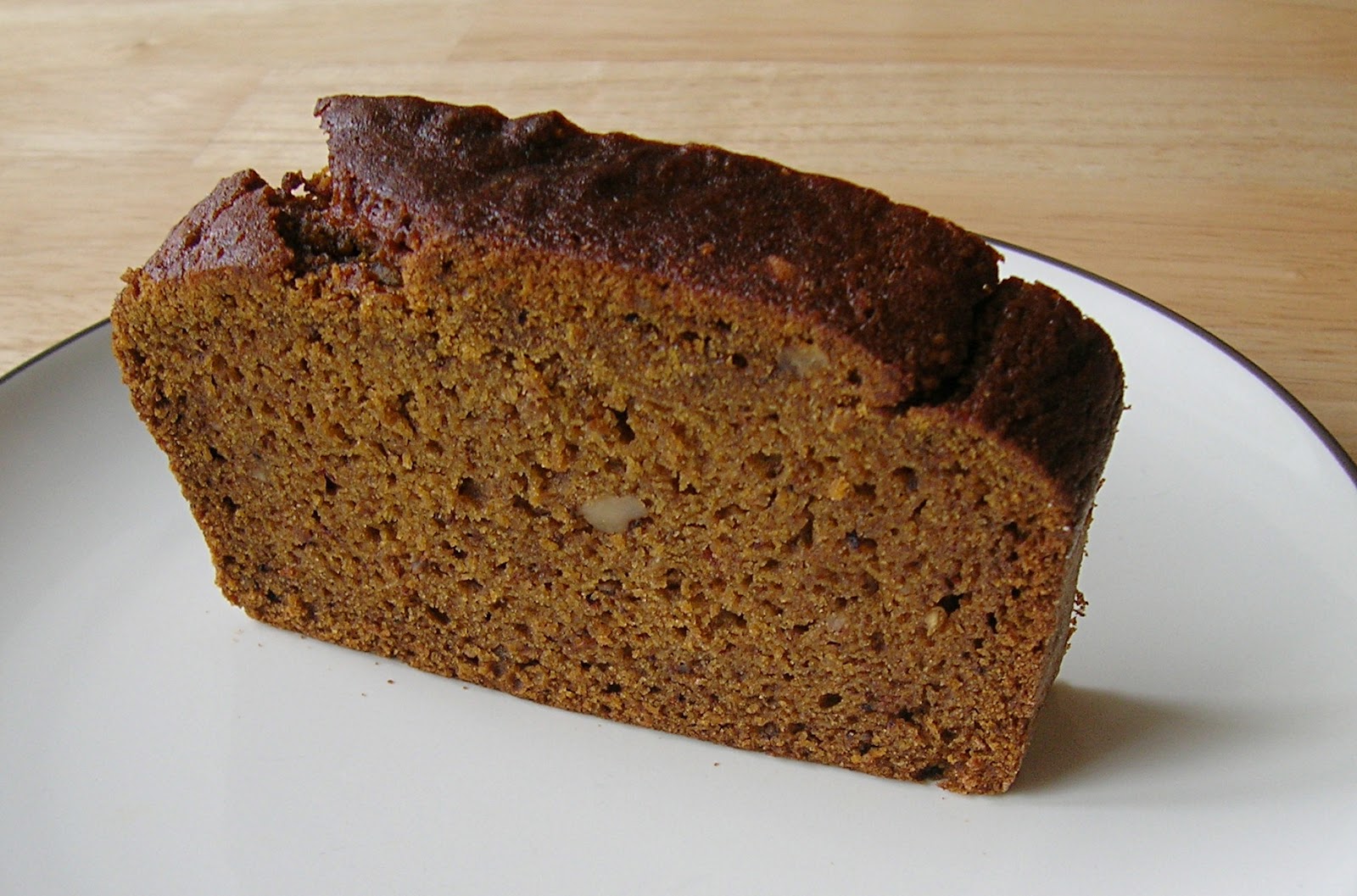
Black Tea Pumpkin Bread


My favorite black tea is Assam. It’s rich, with a dark earthy flavor that begs to stand alongside squash and warm spices. I’ve started using it instead of buttermilk or soymilk in my pumpkin bread to cut out dairy and soy. It enhances the pumpkin’s flavor without requiring center stage, the way bananas strut their big overripe muscles.

As I tested this recipe a final time, my husband announced he wanted pho—that deliciously simple Vietnamese soup whose broth brightens any grey Seattle day. I mixed the dry ingredients, set them aside, and out we ventured for lunch. We’re in the middle of packing for our move to Ballard, so this was a very welcome break from our box-filled weekend. I could finish my black tea pumpkin bread when we returned.

It’s best to avoid interruption while baking. You might leave out an ingredient—such as brown sugar.

I left out the brown sugar.

I whipped the batter from the oven, staring at it a moment in dismay. Then I shrugged, poured maple syrup over it, and baked it anyway.

It’s best not to take baking too seriously. Life's kitchen will throw you enough moths in the flour, mildewy undersinks, and rotting green onions at the back of the fridge; a single neglected ingredient is an adventure. If I’d thrown out the batter and started over, I never would have discovered this recipe works without sugar as well as it does with sugar. The flavor is different, of course, but delicious in its own way. Salt wanders the taste buds, bringing out the natural sweetness of pumpkin alongside a delicate maple crust. It’s a perfect option if you’re cutting back on sugar. Or if you get distracted mid-production when you really ought to have been packing pans in the first place, not making more of them dirty.

This recipe works with either pumpkin or sweet potato puree.

Black Tea Pumpkin Bread
Makes 1 loaf

160g (1 1/4 cup) sorghum or brown rice flour
125g (1 cup) sweet rice flour
40g (1/4 cup) tapioca starch
2 tsp baking soda
200g (1 cup) brown sugar
1/2 tsp ground allspice
1/2 tsp ground ginger
1/4 tsp ground nutmeg
50g (1/2 cup) ground pecans or walnuts
25g (3 Tbls) ground flax seeds
Pecan or walnut pieces, optional
2 eggs
1/3 cup canola oil
1/2 can (7.5oz) pumpkin or sweet potato puree
1/2 cup black Assam tea
1 Tbls molasses
2 tsp apple cider vinegar
1 tsp lemon juice

Preheat oven to 375 degrees Fahrenheit. Grease and sweet rice flour a 9-inch loaf pan. Set aside.

To make black tea, bring 3/4 - 1 cup water to boil. As soon as it boils, remove it from heat, add 2 tsp loose leaf black Assam tea and cover. Let steep for 3 minutes, 30 seconds. Uncover and strain into a cup or bowl to cool while you mix the rest of the ingredients.

In a large bowl, combine flours, starch, baking soda, sugar, salt, spices, ground nuts, and flax seeds. Mix well so all clumping is broken up. In a separate bowl, beat eggs into oil, pumpkin puree, tea, molasses, vinegar, and lemon juice.

Pour wet ingredients into dry, mixing quickly but thoroughly. Pour batter into prepared loaf pan, smooth top with back of spoon, and bake 45-60 minutes. Bread is done when toothpick inserted into center comes out clean and top of loaf is well-browned. Let cool at least 5 minutes in the pan before removing and cutting. Store wrapped in plastic and/or aluminum foil in fridge up to 1 week.

Sugar-free variation: Make bread as directed, leaving out the brown sugar. Before baking, drizzle 1/4 cup maple syrup over top of batter. Bake 35-45 minutes.

Tuesday, February 7, 2012

Pine Nut Oatcakes


When I was growing up, my mother made oatcakes according to her own recipe every week. These were our breakfast, accompanied by tea, every morning for my entire childhood. Sometimes we'd come home from school to sheets of oatcakes fresh out of the oven; then, my mother would cover a few in chocolate chips and spread the chocolate all over as they melted.

Pine nuts are my own addition, inspired by the fantasy series A Song of Ice and Fire, by George R. R. Martin. They add an earthy, savory element, redolent of rocky paths through mossy forests. It isn’t hard to imagine an epic trek over a wintry landscape, fueled by these hearty oatcakes. They certainly make a morning bus commute more fantastical.

Pine Nut Oatcakes
Makes about 2 dozen

60g (1/2 cup) sweet rice flour
60g (1/2 cup) sorghum, amaranth, or brown rice flour
110g (1 cup) gluten-free rolled oats
60g (1/2 cup) rice bran
60g (1/2 cup) almond meal, pecan meal, or other ground nuts*
30g (1/4 cup) ground flaxseeds
65g (1/2 cup) cane sugar
1/2 tsp salt
1/2 tsp baking soda
2/3 cup shortening, palm oil, OR vegan butter (145g vegan butter)
1/4 cup boiling water, more as needed
50g (1/3 cup) raw pine nuts

Preheat oven to 350 degrees Fahrenheit. Mix together flours, oats, bran, almond meal, sugar, salt, baking soda, and ground flaxseeds.


Cut in shortening or palm oil or butter until dough resembles coarse meal. Add pine nuts if using. Pour boiling water over dough and mix in thoroughly, adding more as needed to form a solid dough that is damp but not too sticky to work with. (I usually add between 1/8 - 1/4 cup more, depending on the moisture in the air.) Add more amaranth flour if you make it too wet.


Dust a large flat surface with sweet rice flour. Split dough in half and roll out one section at a time till thin (about 1/8 - 1/4 inch). Cut into rectangles and arrange on a cookie sheet. Bake 15-20 minutes, or until oatcakes are lightly browned on edges.


Serve plain or with peanut butter, jam, Nutella, vegetable spread, cheese, or anything else that strikes your fancy. Keep in a sealed container in the refrigerator for up to 2 weeks. They keep well at room temperature up to 5 days or so.

Notes: If your dough is too dry, the oatcakes will be very delicate and crumbly. If it’s too wet, you’ll have a hard time working with it and they’ll bake very tough. You want the dough to be like pie crust. Don’t worry if the texture is off the first time you make them; they’ll still be enjoyable.

*If you want to make this recipe nut-free, add about 1/3 cup of another gluten-free flour in place of the almond meal: buckwheat, millet, and soy will all work. I’ve found teff to be too delicate for this recipe.

Saturday, January 21, 2012

Focaccia


Snow in Seattle means muted footfalls and tire-swishing in the early morning. Buses sloosh cautiously along the streets: late, indifferent, and half full. The city stays home, eats soup, and plays board games.

We remember what it’s like to feel winter closing in around the walls.

I know. It’s a little silly. But to be fair, Seattle doesn’t have the equipment or preparations in place to function properly in snow the way other cities do. Last year, I had a job that wouldn’t let me be snowed in, even for a day. I had to push my way out, bundled and grumpy as an interrupted bear. This year I’m privileged.

So I allowed the snow to shut my door and my kitchen kept me warm.

There’s something luxurious and expansive about baking yeasted bread when there’s snow outside. I’m in no hurry and a slow hour of rising is pleasant as that fresh malty scent searches out every corner of the apartment. And with my good buttery olive oil? I swear I smelled the olive trees baking in their foreign heat.

Focaccia*
Makes 1 9x12-inch pan, about 8 slices

2 eggs
1 egg white
40g (1/3 cup) tapioca starch
20g (3 Tbls) potato starch
20g (3 Tbls) potato flour
50g (1/2 cup) sweet rice flour
60g (1/2 cup) sorghum or brown rice flour
1 1/4 tsp active dry yeast
1/2 tsp sea salt
1 tsp dried basil, crushed
1/2 tsp dried rosemary, crushed
2 tsp brown sugar
2 Tbls golden flaxseeds, ground
2 Tbls good olive oil, additional for pan
1 tsp apple cider vinegar
1/2 - 3/4 cup warm water (no warmer than 120F)

Warm oven slightly, then turn it off to provide a warm place for the bread to rise. Alternatively, prepare a warm space in your kitchen where it can rise undisturbed. Pour 1-2 Tbls olive oil into 9x12-inch pan and rub it all around, letting excess pool on the bottom. Set aside.

In a stand mixer with the whisk attachment (or a hand mixer), combine eggs and egg white. Start on a low setting for about 1 minute, then move it to medium, then run on high speed for 4-5 minutes, until eggs are airy and have doubled in volume.

While the eggs beat, combine flours, yeast, salt, herbs, and brown sugar in a separate bowl. In a small dish, stir together ground flaxseeds, olive oil, and apple cider vinegar.

When eggs are ready, turn mixer down to low and pour in olive oil mixture. While it runs, spoon in flour mixture and pour in some of the warm water. Depending on the moisture in your kitchen, you may use barely 1/2 cup water or a full 3/4 cup. You want the dough to be very wet and sticky, but not runny.

Scrape dough into oiled pan and gently nudge it out to the edges. It’s okay if it doesn’t quite make it to all the edges; as it rises, it’ll fill out. Cover with plastic wrap or a towel that can be secured so it doesn’t touch the top of the dough. Let dough rise in a warm place for 1 hour or a little more.

When dough is ready, turn oven to 400 degrees Fahrenheit. Drizzle olive oil over the surface of the focaccia, then sprinkle with a dusting of sea salt and/or more herbs. You can also set halved olives into the dough at this stage. When oven has heated, bake focaccia 20-30 minutes, until golden on top and browned on the edges. Serve warm or keep in an airtight container in the fridge up to 4 days.

This makes a spectacular grilled cheese sandwich.

*Adapted from Avec Baking’s Focaccia Bread

Wednesday, January 4, 2012

Pepparkakor, Portal 2 Style


You should know I like to play games. All types of video or board games. Portal 2 is one of my very favorites because it’s full of what I love: puzzles, lasers, a deranged robotic enemy, and
cooperative play. Games are more fun when you share them with other people.

Baking is a game. It has rules to follow (or break), puzzles to solve, sweet rewards, and it’s more fun when you share.

My good friend, Matt, gave me Portal 2 cookie cutters for Christmas. (I mean, seriously, how cool is that?) It doesn’t matter that the holidays have passed. There’s always room for one more batch of Pepparkakor when I have Portal 2 cookie cutters to use. Pepparkakor is the best cookie to make with these because the black pepper bites back—not unlike GLaDOS. Spicy and not too sweet, they’re a perfect post-holiday combination to pass around.

Pepparkakor
Makes 2-3 dozen

1/3 cup butter, real or vegan
120g brown sugar
75g white sugar (vanilla, if you have it)
1 tsp lemon zest
1 small egg
1/4 cup (100g) molasses
120g sorghum flour
100g sweet rice flour
60g tapioca flour
1 tsp baking soda
3/4 tsp ground ginger
1/2 tsp ground cardamom
1/2 tsp ground allspice
1/4 tsp ground nutmeg
1/2 tsp freshly ground black pepper

Day 1
Cream together butter, sugars, and lemon zest. Beat in egg until smooth. Stir in molasses. Add all the dry ingredients and mix well into a uniform dough. It will be soft and sticky. Scoop out onto waxed paper, roll into a log, and refrigerate to roll out the next day. You may also freeze it; try to use the dough within about a month of making it.

Day 2
If your dough is frozen, let it rest at room temperature at least 1 hour before working with it. You may use it immediately from the fridge. Preheat oven to 350 degrees Fahrenheit.

Dust a smooth surface with sweet rice flour. Cut off about 1/4 – 1/3 of the dough to work with at a time. Form into a disk, dust with more sweet rice flour, and roll out very thin, about 1/8-inch. Cut into shapes and arrange on a parchment paper-lined cookie sheet. You may reform and roll out the scraps one time, but after that it’ll be too stiff with flour to bake a good cookie. Bake 8-10 minutes, until cookies are just beginning to brown at the edges. Cool completely before decorating with colored frosting or glaze.

Basic Glaze

1 cup powdered sugar
2-3 tsp lemon juice, Grand Marnier, or coconut milk (more as needed, depending on desired consistency)
Food coloring (optional)

Mix together powdered sugar and some liquid, stirring and adding liquid until all powdered sugar is incorporated and glaze is desired thickness. Drizzle from a fork or scoop into a plastic bag and snip off the tip to give a more controlled line.

Tuesday, December 27, 2011

Hummus Deviled Eggs


I don’t like mayonnaise.

Aioli isn’t bad. There are all sorts of amazing things you can do with a good homemade aioli. But store-bought mayonnaise and I stare suspiciously across the kitchen at one another and we’re seldom on eating terms.

A number of years ago, after a particularly ugly stare-down with the mayo jar, I decided deviled eggs didn’t need the stuff and used homemade hummus instead. Now there’s hardly a holiday without some request or excuse to make Hummus Deviled Eggs. I’ll tolerate the mayonnaise jar, but tahini and chickpeas forever retain places of honor in my kitchen.

Make the hummus first, up to 2 days ahead. I’ve included the quantities for a full batch of hummus, though to use all of it you’d have to hard boil at least 18 eggs. Use some of the hummus for the eggs, then keep the rest for a quick healthy snack or dip for vegetables or crackers. These make an excellent New Year's hors d'oeuvre.

Hummus Deviled Eggs
Makes 24

1 can (15oz) chickpeas, drained and rinsed
2 cloves garlic, peeled and crushed
1/2 tsp salt, to taste
1/3 cup tahini
1/4 cup lemon juice
1/4 cup cold water
Dash good dark olive oil
1/4 tsp ground coriander
1/4 tsp ground cumin
12 eggs, hardboiled
Fresh parsley, washed, and finely chopped for garnish (about 1/4 cup)
Smoked paprika for garnish (optional)

Put rinsed chickpeas into a food processor, along with garlic and salt. Pour tahini onto chickpeas in a separate area from the garlic. Add half the lemon juice. Turn on the food processor and add remaining lemon juice and the water gradually as it grinds.

While it is still grinding, pour in a small dash of olive oil (no more than 2-3 tsp). Run it for at least 5 minutes; you want it to be very smooth. Add coriander and cumin. Stop it periodically to scrape sides down, taste, adjust for salt, lemon juice, etc. When it tastes perfect, stop blending. Scoop out about half the hummus and put it in the fridge (this is extra). Leave the rest in the food processor.

Carefully peel hardboiled eggs, slice them in half neatly lengthwise, and reserve yolks to a bowl on one side. Arrange whites together on a platter.

Blend about 8 hardboiled yolk halves (4 whole yolks) into hummus. Taste. Add more yolk halves if needed, but be careful to keep it from going too yellow or tasting too rich. Add more salt if needed. If yolks make hummus too dry, add more water or a dash more olive oil.

When the hummus and egg yolks are blended and tasting delicious, scoop hummus into a pastry bag with a large decorating tip. Pump hummus into egg white halves, being careful to fill the hollows well. Do not overfill; you want these to be easy to pick up.

After all eggs are filled with hummus, finish by tossing chopped parsley over all eggs as garnish. You want a good scattering, so it looks festive, but not as covered as a mossy forest floor. Alternatively, you may use smoked paprika as a garnish.

These keep overnight wrapped carefully in plastic, but they are best made within a couple hours of serving. Be careful to keep plastic from touching the eggs or they’ll smear and look messy when the plastic is removed.

Monday, December 19, 2011

Dodee Cookies


My great great grandmother, Dodee, would sit out on the porch and drink a beer with my grandfather. She taught my grandmother how to cook meat and kept a sharp wooden three-pronged fork for turning pork chops, which she’d serve with homemade applesauce and sauerkraut. Around her memory hover little unsubstantiated tales involving occasional cigars and outright profanity. She was the best of all idealized grandmothers and even if the facts are a little stretched, her character remains a family legend of love.

I think we would’ve gotten along swimmingly.

Dodee’s cookies are a Christmas tradition for my family. The holiday isn’t right until these emerge golden from the oven, topped with their shining maraschino jewels. I don’t know how long her recipe took to perfect. It probably suffered pinches and prods in her kitchen for years until she honed it into flawlessness. My gluten-free version took ten Decembers.

When a cookie is mostly butter, the slightest tweak to gluten-free flours and starches shakes the recipe to its core. These cookies have been responsible for more oven cleanups than any other recipe I’ve ever created or converted. Now I can’t stop smiling as I write this, having eaten four perfect Dodee cookies that each hold the flavor I remember from way back in my gluten-filled childhood.

I like to think I know a part of Dodee through her cookies. It’s been a long decade of baking chats with her as I change starches, add or subtract ingredients, and strive towards her cookie’s simple genius. This is a flavor meant for sharing.

Happy Baking!

Dodee Cookies
Makes 2 dozen

1 stick real butter or vegan butter (1/2 cup)
85g brown sugar
50g sweet rice flour
45g amaranth flour
55g tapioca starch
raw pecans or maraschino or amarena cherries

Preheat oven to 350 degrees Fahrenheit. Line a cookie sheet with parchment paper.

Cream together butter and brown sugar in a medium bowl. Stir in flours until dough forms and everything is well-mixed. Scoop out about 1 tsp of dough at a time and roll it into balls. Arrange on cookie sheet about 1-2 inches apart. Press a fork into each ball just once, then top with either a pecan piece or half a cherry.


Bake about 10-12 minutes, until cookies are golden and just beginning to brown on the edges. Cool at least 5 minutes before removing from sheet. Cookies will be soft when just baked, but will become crunchy as they cool. Cookies with cherries will turn soft again the next day. Store in an airtight container up to 1 week.

Note: Using vegan butter in these cookies works, though their edges will be feathery instead of smooth.

Grammie and me, during a past holiday season